Choosing the right coating for your basement floor can feel like a major decision. It needs to be durable enough to handle foot traffic, resistant to moisture, and look great for years to come. Two of the most popular options on the market are epoxy and polyurea coatings. While they might seem similar at first glance, they have key differences that could make one a much better fit for your home than the other.
This guide will break down everything you need to know about epoxy versus polyurea basement coatings. We will explore their properties, installation processes, durability, and costs. By the end, you’ll have a clear understanding of which option provides the best value and performance for your basement floor, helping you make an informed decision for your home improvement project.
Key Takeaways
- Polyurea offers superior flexibility and durability, making it more resistant to impacts, abrasions, and temperature changes compared to the more rigid epoxy.
- Polyurea cures much faster than epoxy, often in as little as 24 hours, allowing you to use your basement sooner. Epoxy can take several days to fully cure.
- While epoxy may have a lower initial material cost, polyurea’s longevity and lower maintenance needs can offer better long-term value, protecting your investment for years to come.
What is Epoxy Coating?
Epoxy is a resinous floor coating created by mixing a polyamine hardener with an epoxide resin. When these two components are combined, a chemical reaction occurs, resulting in a hard, rigid plastic material that bonds securely to concrete. For decades, epoxy has been a go-to solution for garages, warehouses, and industrial settings due to its strength and resistance to chemicals.
It creates a thick, glossy surface that can hide minor imperfections in the concrete below. Epoxy coatings are available in a wide range of colors and can be customized with decorative flakes or metallic pigments to create unique, high-end finishes.
However, its rigidity is also one of its main drawbacks. Because epoxy isn’t very flexible, it can be prone to cracking or chipping if a heavy object is dropped on it. It’s also sensitive to UV light, which can cause it to yellow or fade over time, although this is less of a concern for a basement coating that isn’t exposed to direct sunlight.
What is Polyurea Coating?
Polyurea is a subtype of polyurethane that is known for its remarkable durability and flexibility. It’s formed through a chemical reaction between an isocyanate component and a synthetic resin blend. The result is a coating that is significantly more flexible and resilient than traditional epoxy. Think of it as a more advanced, high-performance alternative.
This flexibility allows polyurea to absorb impacts without chipping or cracking, making it an excellent choice for high-traffic areas or spaces where tools and equipment might be dropped. It’s also 100% UV stable, so it won’t yellow or fade, ensuring your floor’s color remains vibrant.
One of the most significant advantages of a polyurea basement coating is its rapid curing time. While epoxy can take several days to fully harden, a polyurea system can cure and be ready for foot traffic in as little as 24 hours. This means less downtime and disruption for your household.
Head-to-Head Comparison: Epoxy vs. Polyurea
To help you decide which basement coating is right for you, let’s compare them across several key categories.
Durability and Flexibility
When it comes to durability, both options are strong, but polyurea has a distinct advantage. Epoxy creates a hard, shell-like surface that is very resistant to abrasion. However, this rigidity makes it brittle. A dropped hammer or a heavy piece of furniture can easily chip or crack the surface.
Polyurea, on the other hand, is about four times stronger than epoxy and far more flexible. It can withstand heavy impacts and abrasions without showing damage. Because it can expand and contract with temperature fluctuations, it’s less likely to crack over time, which is especially important for concrete floors.
Winner: Polyurea
Installation and Curing Time
The installation process for both coatings begins with preparing the concrete surface. This involves grinding the floor to create a porous profile that allows the coating to bond effectively.
The main difference lies in the curing time. Epoxy requires specific temperature and humidity levels to cure properly, and the process can take several days. During this time, the floor is vulnerable to damage and cannot be used.
Polyurea cures much more quickly and is less sensitive to environmental conditions. A professional concrete coating company in Omaha, NE, can often complete a polyurea installation in a single day, with the floor ready for use within 24 hours. This fast turnaround is a major benefit for homeowners who want to minimize disruption.
Winner: Polyurea
Appearance and Customization
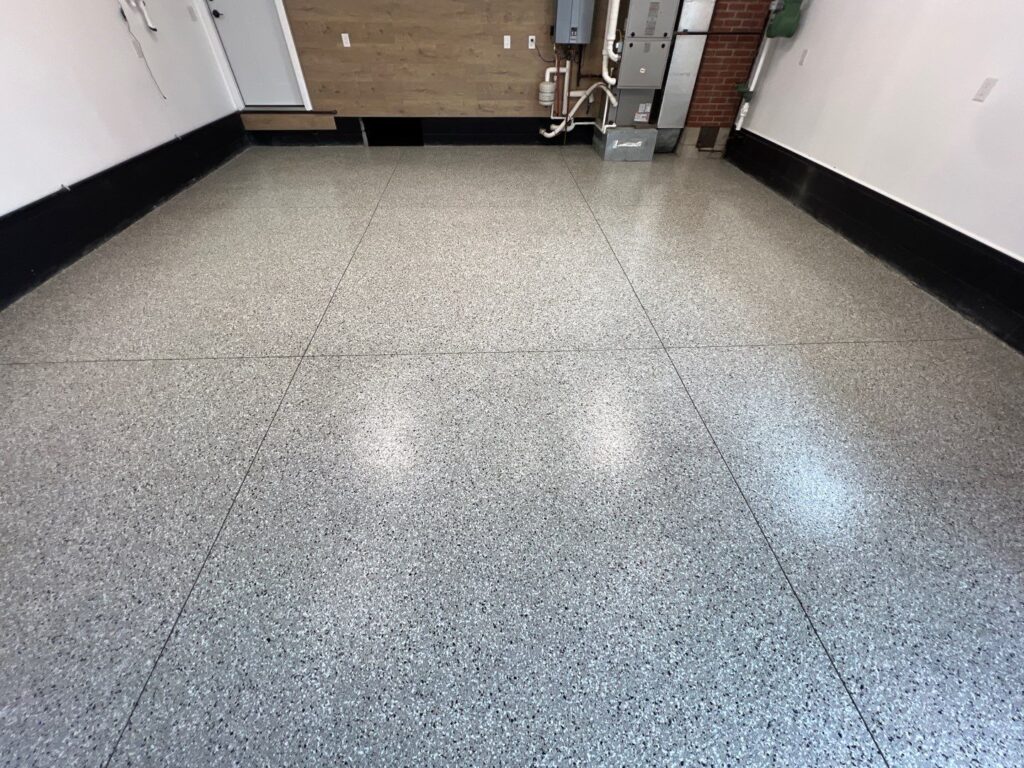
Both epoxy and polyurea offer a wide range of aesthetic options. They come in various solid colors and can be enhanced with decorative vinyl flakes to create a textured, granite-like appearance. This not only improves the look of the floor but also adds slip resistance.
Epoxy is known for its high-gloss finish, which can brighten up a dark basement. Polyurea also provides a beautiful, glossy finish that is just as appealing. Since both coatings can achieve similar visual results, this category is a tie.
Winner: Tie
Longevity and Maintenance
A professionally installed epoxy floor can last for several years, but it may require periodic reapplication or touch-ups due to chipping or yellowing. Maintenance involves regular sweeping and mopping with a pH-neutral cleaner.
A polyurea basement coating is a more permanent solution. Thanks to its superior durability and UV stability, it maintains its integrity and appearance for much longer. Many professional installers, like TSR Concrete Coatings, offer lifetime warranties on their polyurea systems, reflecting their confidence in the product’s longevity. Maintenance is just as simple as it is for epoxy.
Winner: Polyurea
Cost
On a per-gallon basis, epoxy materials are generally less expensive than polyurea. This can make DIY epoxy kits seem like an attractive, budget-friendly option. However, the cost of materials is only part of the equation.
Professional installation significantly impacts the final price. While a professionally installed polyurea floor may have a higher upfront cost, its long-term value is often greater. You’re paying for a faster installation, superior durability, and a longer lifespan with fewer maintenance concerns. When you factor in the potential costs of repairing or replacing a failing epoxy floor, polyurea often proves to be the more cost-effective investment over time.
Winner: Polyurea (for long-term value)
Make the Right Choice for Your Basement
When it comes to transforming your basement, the flooring you choose plays a crucial role in both function and style. While epoxy has been a popular choice for years, polyurea coatings offer significant advantages in durability, flexibility, and installation speed that make them a superior option for most homeowners.
Investing in a high-quality polyurea basement coating means you get a floor that not only looks fantastic but is also built to last a lifetime. At TSR Concrete Coatings, we specialize in providing top-tier concrete coating solutions. Our experienced team can help you select the perfect finish for your space and complete the installation with minimal disruption to your home.
Ready to upgrade your basement floor? Contact TSR Concrete Coatings today for a free, no-obligation quote from the leading concrete coating company in Omaha, NE.