A damp basement can be more than just a nuisance; it can be a silent threat to your home’s structural integrity and your family’s health. Water damage from leaks, condensation, and high humidity can lead to costly repairs, mold growth, and a loss of valuable living space. Many homeowners in Omaha, NE, and beyond focus on exterior solutions like sealants and drainage systems, but they often overlook a critical first line of defense: the basement floor itself.
This guide explores why a professional concrete basement coating is a fundamental step in creating a truly waterproof and usable space. We will cover the common causes of basement moisture, the limitations of traditional waterproofing methods, and the significant advantages of starting from the ground up with a durable, high-quality floor coating. Understanding this foundational step will not only protect your investment but also transform your basement from a damp, forgotten area into a dry, healthy, and functional part of your home.
Key Takeaways
- A high-quality concrete basement coating is the essential first step to comprehensive waterproofing, creating an impermeable barrier that prevents moisture from seeping up through the porous concrete floor.
- Unlike temporary solutions like paint or sealers, professional polyurea floor coatings offer superior durability, flexibility, and resistance to abrasion, chemicals, and hydrostatic pressure, ensuring long-term protection.
- For homeowners looking for a reliable basement coating company in Omaha, NE, choosing an expert installer like TSR Concrete Coatings ensures a properly prepared surface and flawless application for a permanently dry and functional basement.
Understanding the Enemy: Common Causes of Basement Moisture
To effectively waterproof your basement, you first need to understand where the water is coming from. Moisture can infiltrate this subterranean space through several pathways, often working in combination.
1. Hydrostatic Pressure
This is one of the most powerful and common forces driving water into your basement. After heavy rain or snowmelt, the soil around your foundation becomes saturated. This saturation creates significant pressure—known as hydrostatic pressure—that can force water through even the tiniest cracks and pores in your concrete foundation walls and floor. Concrete is naturally porous, acting like a rigid sponge. When the ground is soaked, this pressure can push water vapor and even liquid water directly through the floor slab.
2. Capillary Action
Even without significant pressure, water can move upwards through the porous structure of concrete via capillary action. This is the same scientific principle that allows a paper towel to soak up a spill. Water molecules are drawn into the microscopic channels within the concrete, slowly wicking moisture from the damp soil below into your basement. This process is subtle but constant, contributing to a persistently damp environment and that classic musty basement smell.
3. Interior Sources of Humidity
Not all moisture comes from the outside. Everyday activities can generate significant humidity within your home. Leaky pipes, a poorly ventilated clothes dryer, a basement bathroom without an exhaust fan, or even the simple act of breathing can release moisture into the air. In a cool, enclosed space like a basement, this humid air often condenses on the cold concrete floors and walls, creating surface dampness that can lead to mold growth and deterioration.
4. Cracks and Gaps
Over time, foundations settle and shift, which can lead to cracks in the concrete walls and floor. These cracks become direct entry points for water. Even minor fissures can widen over time, allowing more significant amounts of water to seep in during wet weather. Gaps around pipes, windows, and the joint where the floor meets the wall (the cove joint) are also highly vulnerable spots for water intrusion.
Without addressing these issues at their source, you’ll find yourself in a constant battle against moisture, fighting symptoms rather than solving the core problem.
The Flaws in Traditional Waterproofing Methods
Many homeowners attempt to solve basement moisture problems with quick fixes or incomplete solutions. While some of these methods can offer temporary relief, they rarely provide a permanent, comprehensive solution because they fail to address the floor as a primary point of entry.
The Limits of Interior Wall Sealants and Paints
Waterproofing paints and sealants are popular DIY solutions. These thick coatings are applied to the interior of basement walls to block water from passing through. However, they have several major drawbacks:
- They Don’t Address the Floor: Most critically, these products do nothing to stop moisture from seeping up through the concrete floor slab. You can have perfectly sealed walls, but if the floor is still wicking moisture, your basement will remain damp.
- Susceptible to Failure: When hydrostatic pressure builds up behind the walls, it can cause these paints and sealants to blister, peel, and fail. They are essentially creating a dam, but the pressure of the water will eventually win, pushing the coating off the surface.
- Trapping Moisture: In some cases, these sealants can trap moisture within the concrete walls, which can accelerate the deterioration of the concrete over time. The water is still present; it’s just hidden behind a thin layer of paint.
Exterior Waterproofing: An Incomplete Picture
Exterior waterproofing involves excavating the soil around the foundation and applying a waterproof membrane to the outside of the walls. This is often combined with installing a French drain to carry water away from the foundation. While this is a highly effective method for preventing water from penetrating the walls, it is also extremely expensive and disruptive.
More importantly, it doesn’t solve the problem of water coming up from below the floor slab. Even with a perfect exterior system, hydrostatic pressure and capillary action can still force moisture up through the basement floor, leaving you with a perpetually damp environment. It’s a crucial piece of the puzzle, but not the whole solution.
Sump Pumps and Interior Drainage Systems
Interior drainage systems (also known as “water control systems”) and sump pumps are designed to manage water after it has already entered your basement. These systems collect water that seeps in at the cove joint and channel it to a sump pump, which then pumps it out and away from the house.
While essential for basements with significant water intrusion problems, these systems are reactive, not preventative. They manage water; they don’t stop it from entering. Furthermore, they do not prevent moisture vapor from passing through the concrete floor itself. Relying solely on a sump pump means accepting that water will always be present in or under your basement. For a truly dry living space, you need a proactive solution that starts with the floor.
The Foundation of a Dry Basement: A Professional Concrete Coating
A high-quality concrete basement coating is the single most effective first step you can take to waterproof your basement from the inside out. By creating an impermeable, durable, and seamless membrane over the entire floor, you effectively shut down the primary pathway for moisture intrusion.
At TSR Concrete Coatings, we specialize in polyurea floor coatings, a technologically advanced solution that far surpasses traditional epoxy or paint. Here’s why a professional polyurea coating is the superior choice for your basement floor.
Creates a 100% Waterproof Barrier
Our multi-layer polyurea coating system penetrates the pores of the concrete and then cures to form a thick, solid, and non-porous layer. This seamless membrane is completely impervious to water. It permanently blocks moisture from wicking up through capillary action and is strong enough to resist the immense force of hydrostatic pressure. Water vapor from the ground below simply cannot pass through it, keeping your basement floor dry, year-round.
Unmatched Durability and Flexibility
Basements are high-traffic areas, whether used for storage, a workshop, or a finished living space. You need a floor that can withstand daily use.
- Abrasion Resistance: Polyurea coatings are four times stronger and more abrasion-resistant than epoxy, meaning they won’t scratch, scuff, or wear down from foot traffic, dropped tools, or storage bins being dragged across the floor.
- Flexibility: Concrete naturally expands and contracts with temperature changes, and foundations can shift slightly over time. Epoxy coatings are rigid and can crack under this stress. Polyurea, however, remains flexible, allowing it to move with the concrete without cracking, chipping, or delaminating. This ensures the waterproof seal remains intact for the life of your home.
- Chemical Resistance: Our coatings are resistant to common household chemicals, oil, and salt, making cleanup a breeze and preventing stains from setting in.
Promotes a Healthier Environment
By blocking moisture, a concrete coating eliminates the damp conditions that mold, mildew, and bacteria need to thrive. This not only gets rid of that musty basement smell but also creates a healthier indoor environment for your family. Poor air quality in the basement can circulate throughout the entire house, so a dry basement contributes to better air quality everywhere. Our coatings are also low-VOC and cure quickly, so you don’t have to worry about lingering fumes.
A Foundation for Finishing
If you plan to finish your basement, installing a floor coating first is a critical investment. Laying carpet, wood, or tile directly on untreated concrete is a recipe for disaster. Moisture wicking through the slab will quickly ruin these materials, leading to rot, mold, and costly replacement. A polyurea coating creates a stable, dry substrate, protecting your investment in flooring and ensuring your finished basement remains beautiful and functional for years to come.
Finding the Right Basement Coating Company in Omaha, NE
The success of a concrete basement coating depends heavily on the quality of the product and the expertise of the installation team. Proper surface preparation is absolutely critical. Without it, even the best coating will fail.
This is why choosing an experienced basement coating company in Omaha, NE, like TSR Concrete Coatings, is so important. Our certified installers follow a meticulous process:
- Diamond Grinding: We begin by mechanically grinding the entire concrete surface. This removes any old sealers, contaminants, and laitance (the weak top layer of concrete), and opens up the pores of the concrete to ensure a deep, tenacious bond.
- Crack and Pit Repair: We repair all cracks, pits, and spalls using a flexible mender that becomes a permanent part of the floor.
- Base Coat Application: We apply a 100% solids, self-priming polyurea base coat that wicks deep into the prepared concrete, forming an unbreakable bond.
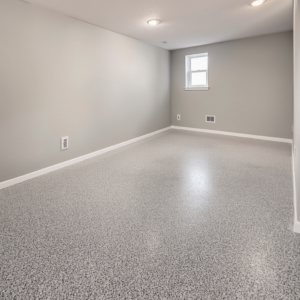
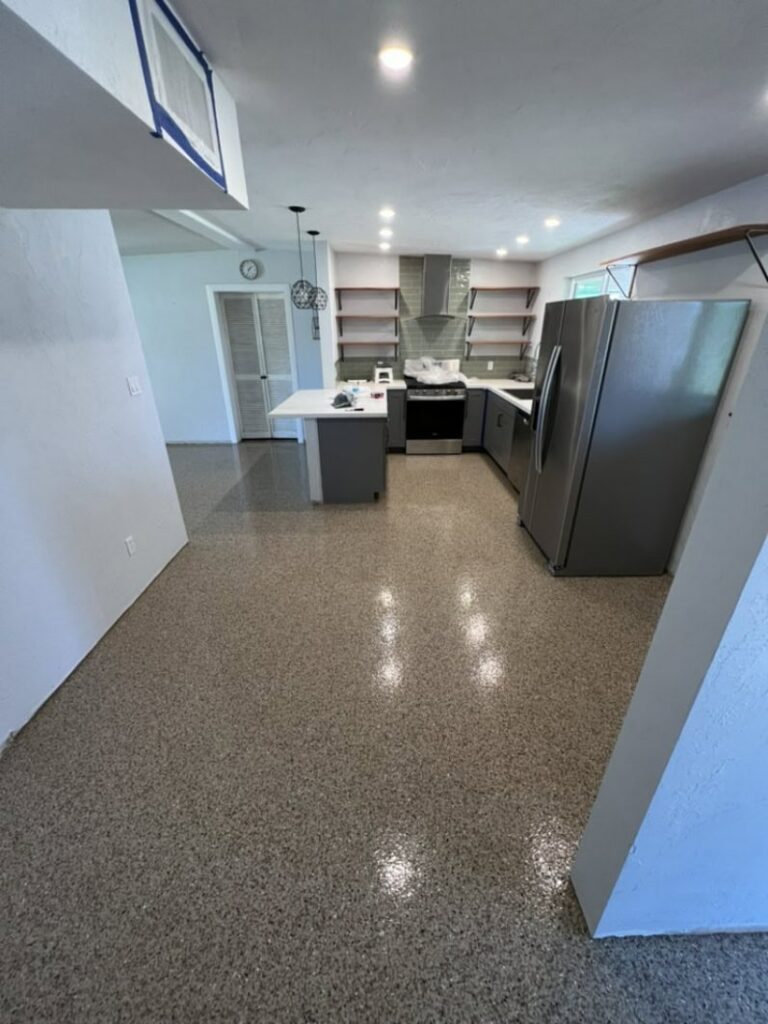
- Chip System Application (Optional but Recommended): A full broadcast of decorative vinyl chips is applied to give the floor color, texture, and added durability.
- Scraping and Finishing: The chips are scraped to create a uniform, lightly textured surface.
- Top Coat Application: Finally, we apply a UV-stable, chemical-resistant polyurea clear coat that seals the system and provides a lifetime of protection and an easy-to-clean finish.
This entire process can often be completed in just one day, and you can walk on your new floor within 24 hours.
Your First Step to a Better Basement
Stop fighting a losing battle against basement moisture with temporary fixes. True waterproofing starts from the ground up. By installing a professional concrete basement coating, you are not just painting a floor; you are investing in a permanent solution that protects your home’s foundation, improves your family’s health, and unlocks the full potential of your basement space.
If you’re tired of a damp, musty basement and are looking for a reliable basement coating company in Omaha, NE, contact TSR Concrete Coatings today. Let us help you take the first and most important step toward a clean, dry, and usable basement that adds value to your home for a lifetime.