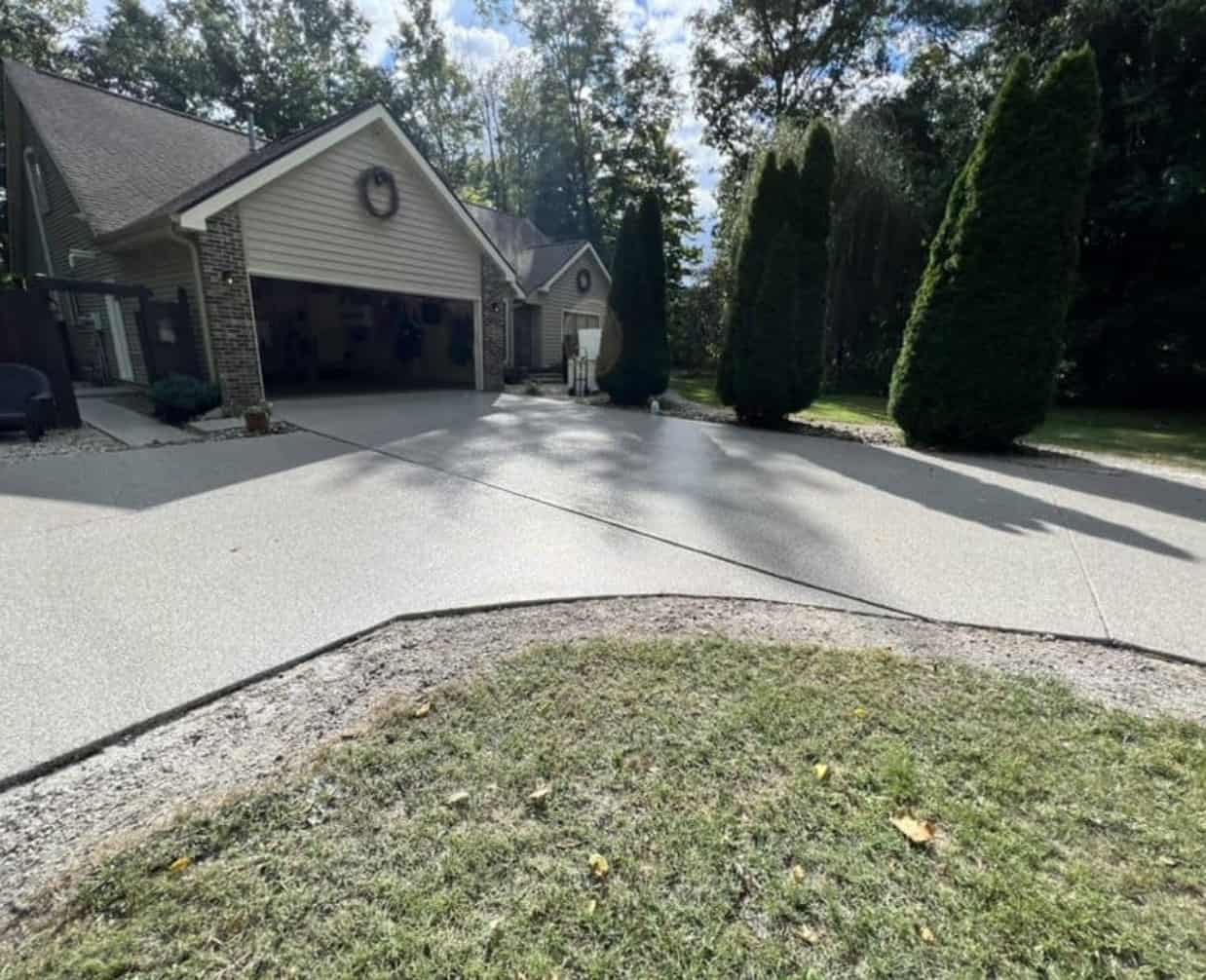
Your concrete driveway is more than just a place to park your car. It’s a major part of your home’s curb appeal and a significant investment. However, exposure to harsh weather, heavy vehicles, and daily wear and tear can lead to unsightly cracks and surface damage. One of the most effective ways to protect this investment is by applying a high-quality concrete driveway coating.
This comprehensive guide will explain how these coatings work to prevent common issues like cracking and freeze-thaw damage. We will cover the science behind concrete’s vulnerability, the protective mechanisms of different coatings, and why professional installation is key to long-term durability. By the end, you’ll understand how a simple layer of protection can save you from costly repairs and keep your driveway looking pristine for years.
Key Takeaways
- Concrete driveway coatings create a non-porous, waterproof barrier that prevents water from seeping into the concrete. This is crucial for stopping the freeze-thaw cycle, where water expands as it freezes, causing cracks and spalling.
- The flexibility and high tensile strength of advanced coatings, like polyurea, allow them to bridge existing small cracks and absorb the stress from temperature changes and impacts, preventing new fractures from forming.
- Professional installation by a trusted driveway coating company in Omaha, NE, ensures proper surface preparation and application, which is essential for the coating to bond correctly and provide maximum protection against damage.
Why Concrete Driveways Crack
To appreciate how coatings work, it’s important to first understand why concrete is so susceptible to damage. Concrete may look solid and indestructible, but it’s actually a porous material filled with a network of tiny holes and capillaries. This porosity is its greatest weakness, especially in climates with freezing temperatures.
The Science of the Freeze-Thaw Cycle
The most destructive force acting on a concrete driveway in regions like Omaha is the freeze-thaw cycle. The process is simple yet powerful:
- Water Absorption: Rain, snowmelt, and even humidity cause water to penetrate the surface of the concrete, filling the microscopic pores within the slab.
- Freezing and Expansion: When the temperature drops below 32°F (0°C), this trapped water freezes. As water turns to ice, its volume expands by approximately 9%. This expansion exerts immense internal pressure on the concrete.
- Thawing and Weakening: When temperatures rise, the ice melts, and the water may seep deeper into the newly created micro-fractures.
- Repetition and Failure: Each time this cycle repeats, the pressure widens existing cracks and creates new ones. Over time, this repeated stress weakens the concrete’s internal structure, leading to visible cracks, chipping (spalling), and pitting on the surface.
Other Causes of Driveway Damage
While the freeze-thaw cycle is a primary culprit, other factors contribute to the degradation of your driveway:
- Heavy Loads: The weight of vehicles, especially large trucks or RVs, puts significant stress on the concrete slab, which can lead to structural cracks.
- Shrinkage: As new concrete cures and dries, it naturally shrinks. If not managed with proper control joints, this process can cause random cracking.
- Ground Movement: The soil beneath your driveway can shift, settle, or heave due to moisture changes or freeze-thaw cycles in the ground itself. This uneven support can crack the rigid concrete slab.
- Chemical Exposure: De-icing salts, oil, gasoline, and other chemicals can penetrate the concrete and accelerate its deterioration by breaking down the cement paste that binds it together.
Without protection, your driveway is constantly battling these elements. A concrete driveway coating acts as a shield, neutralizing these threats before they can cause lasting harm.
How a Concrete Driveway Coating Offers Protection
A high-quality coating system does more than just add color or shine to your driveway; it provides a robust, multi-layered defense against the forces that seek to destroy it. At TSR Concrete Coatings, we specialize in advanced polyurea systems that offer superior protection compared to traditional epoxy or acrylic sealers.
Creating an Impenetrable Waterproof Barrier
The primary function of a driveway coating is to seal the porous surface of the concrete. By creating a non-porous, monolithic layer, the coating prevents water from getting in. This is the single most important step in stopping freeze-thaw damage.
With a polyurea coating applied, rainwater and melting snow simply bead up and roll off the surface instead of soaking in. By keeping the concrete dry internally, the expansion-and-contraction pressure from freezing water is completely eliminated. This effectively halts the freeze-thaw cycle in its tracks, preventing the formation of new cracks and stopping existing small ones from getting worse.
Adding Flexibility and Strength
Concrete is incredibly strong under compression (being squeezed) but very weak under tension (being pulled apart). This is why it cracks when it heaves or settles. Modern coatings, particularly polyurea-based systems, introduce a level of flexibility that concrete lacks.
Polyurea has a high elongation property, meaning it can stretch and move with the concrete as it expands and contracts with temperature fluctuations. When the ground shifts slightly or the slab experiences stress, the coating absorbs that energy instead of allowing it to transfer into the rigid concrete. This flexibility helps to:
- Bridge Micro-Cracks: The coating can span over existing hairline cracks, sealing them and preventing them from widening.
- Absorb Impacts: Dropped tools or heavy objects are less likely to chip or damage a coated surface, as the coating dissipates the force of the impact.
- Withstand Temperature Swings: From a hot summer day to a frigid winter night, the coating expands and contracts without cracking, protecting the concrete substrate beneath.
Resisting Chemicals and Abrasions
Your driveway is exposed to more than just water. Spilled oil, gasoline, antifreeze, and harsh de-icing salts can stain and eat away at bare concrete. A high-quality driveway coating is chemically resistant, forming a barrier that prevents these substances from penetrating the surface. Spills can be wiped away easily without leaving a permanent mark or causing long-term damage.
Furthermore, the daily grind of tires, foot traffic, and snow shovels can wear down the surface of uncoated concrete. Polyurea coatings are exceptionally durable and abrasion-resistant. The strong molecular bond of the coating ensures it can withstand heavy use without peeling, chipping, or wearing thin, keeping your driveway looking new for many years.
The Professional Installation Advantage
While it may be tempting to consider a DIY coating kit, the long-term success and durability of a concrete driveway coating depend heavily on professional application. A premier driveway coating company in Omaha, NE, like TSR Concrete Coatings, follows a meticulous process that guarantees optimal performance.
Step 1: Meticulous Surface Preparation
This is the most critical stage of the entire process. A coating is only as good as the surface it’s bonded to. Our professional process begins with diamond grinding the entire driveway. This removes any old, failing sealers, dirt, oil, and the weak top layer of the concrete, known as laitance.
Grinding opens up the pores of the concrete, creating a textured profile that allows the base coat to penetrate deeply and form a permanent mechanical bond. Without this step, a coating will likely peel or fail within a year. We also repair any significant cracks or spalling to ensure a smooth, stable foundation before any coating is applied.
Step 2: Application of the Polyurea Base Coat
Once the surface is prepared, we apply a 100% solids polyurea base coat. This coat wicks deep into the prepared concrete, creating a bond that is three times stronger than that of traditional epoxy. This tenacious adhesion is what prevents peeling and delamination, even under the stress of hot tires and heavy traffic.
Step 3: Broadcasting the Decorative Flake
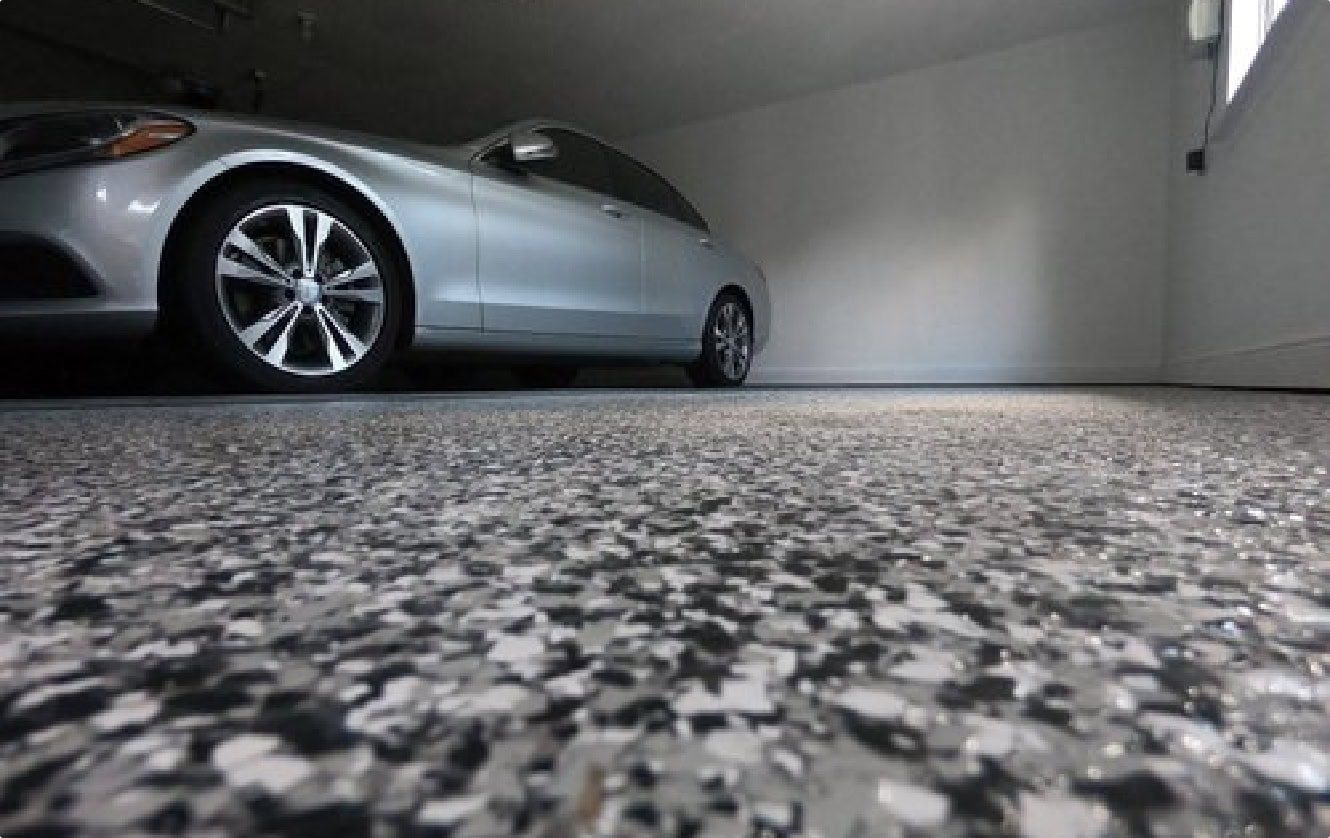
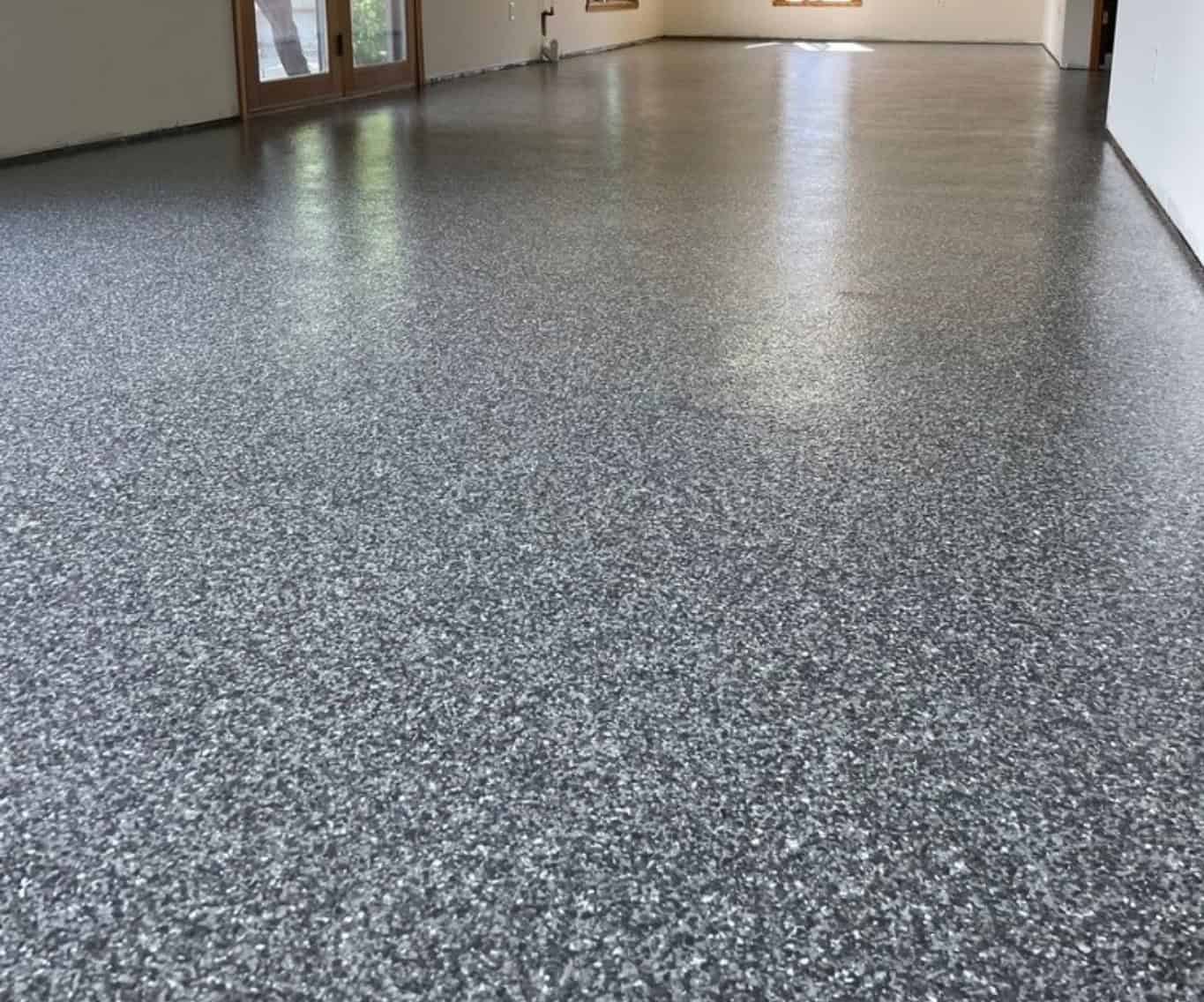
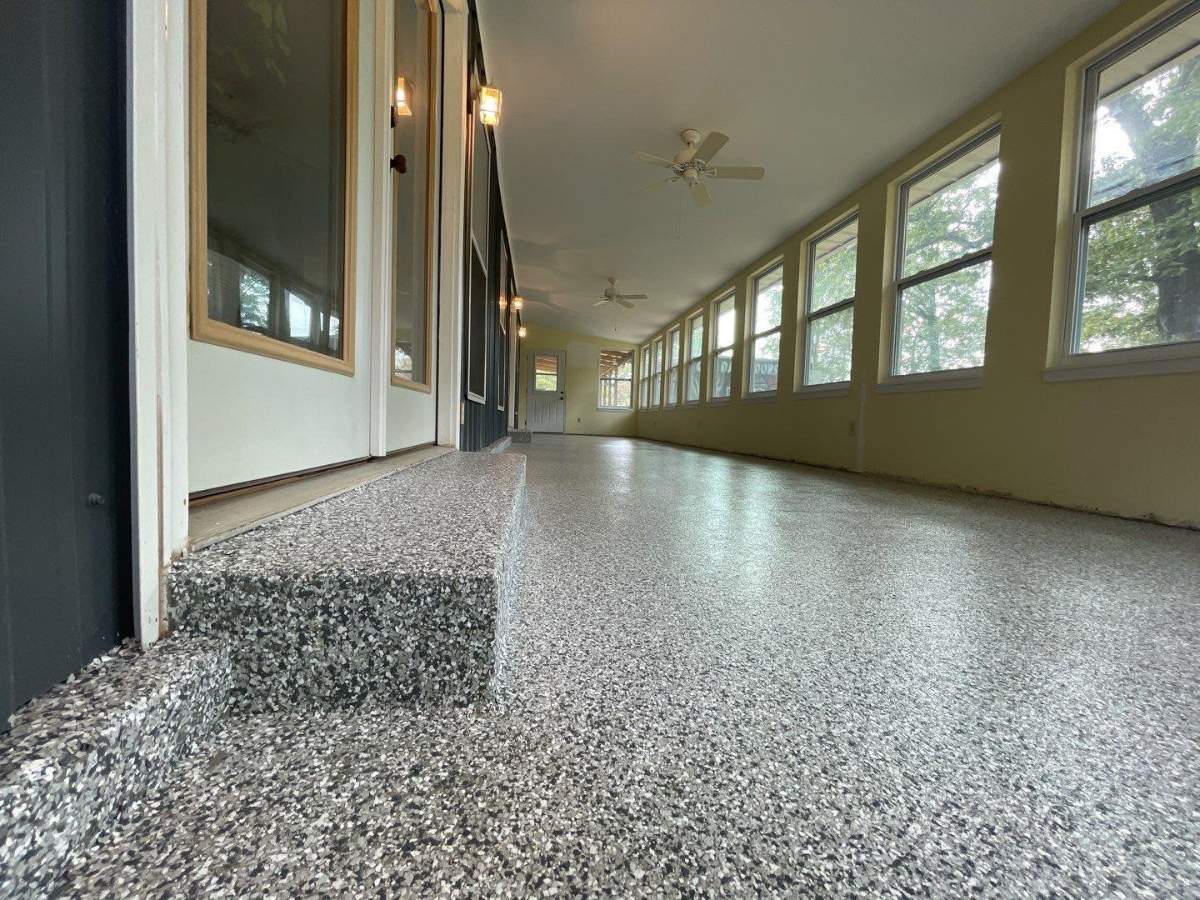
While the base coat is still wet, we broadcast a full layer of decorative vinyl flakes. These flakes are not just for aesthetics; they add texture and an extra layer of durability to the system. The flakes come in a wide range of color blends, allowing you to customize the look of your driveway to perfectly complement your home’s exterior.
Step 4: Sealing with a UV-Stable Top Coat
After scraping away any excess flakes to create a smooth finish, we apply the final layer: a clear, UV-stable polyaspartic top coat. This top coat is the system’s frontline defense. It seals in the flakes and provides protection against:
- UV Rays: It prevents the coating from yellowing or fading due to sun exposure.
- Chemicals: It offers the ultimate resistance to oil, gas, and salt.
- Abrasion: It creates a hard-wearing surface that is easy to clean and maintain.
This multi-layer system, when installed professionally, results in a driveway that is not only beautiful but also fully protected from the elements.
Your Next Step for a Flawless Driveway
Protecting your driveway is about more than just maintaining its appearance; it’s about preserving the value and safety of your home. A professionally installed concrete driveway coating provides a powerful, long-lasting solution to prevent cracks, spalling, and deterioration caused by the harsh Omaha climate. By sealing the surface, adding flexibility, and resisting chemicals, a high-quality coating system ensures your driveway remains a source of pride for years to come.
If you’re tired of looking at a cracked, stained, or aging driveway, don’t wait for the damage to get worse. Contact TSR Concrete Coatings, the leading driveway coating company in Omaha, NE, for a free, no-obligation consultation. Our team can assess your driveway’s condition and show you how our advanced polyurea system can transform and protect your investment.